

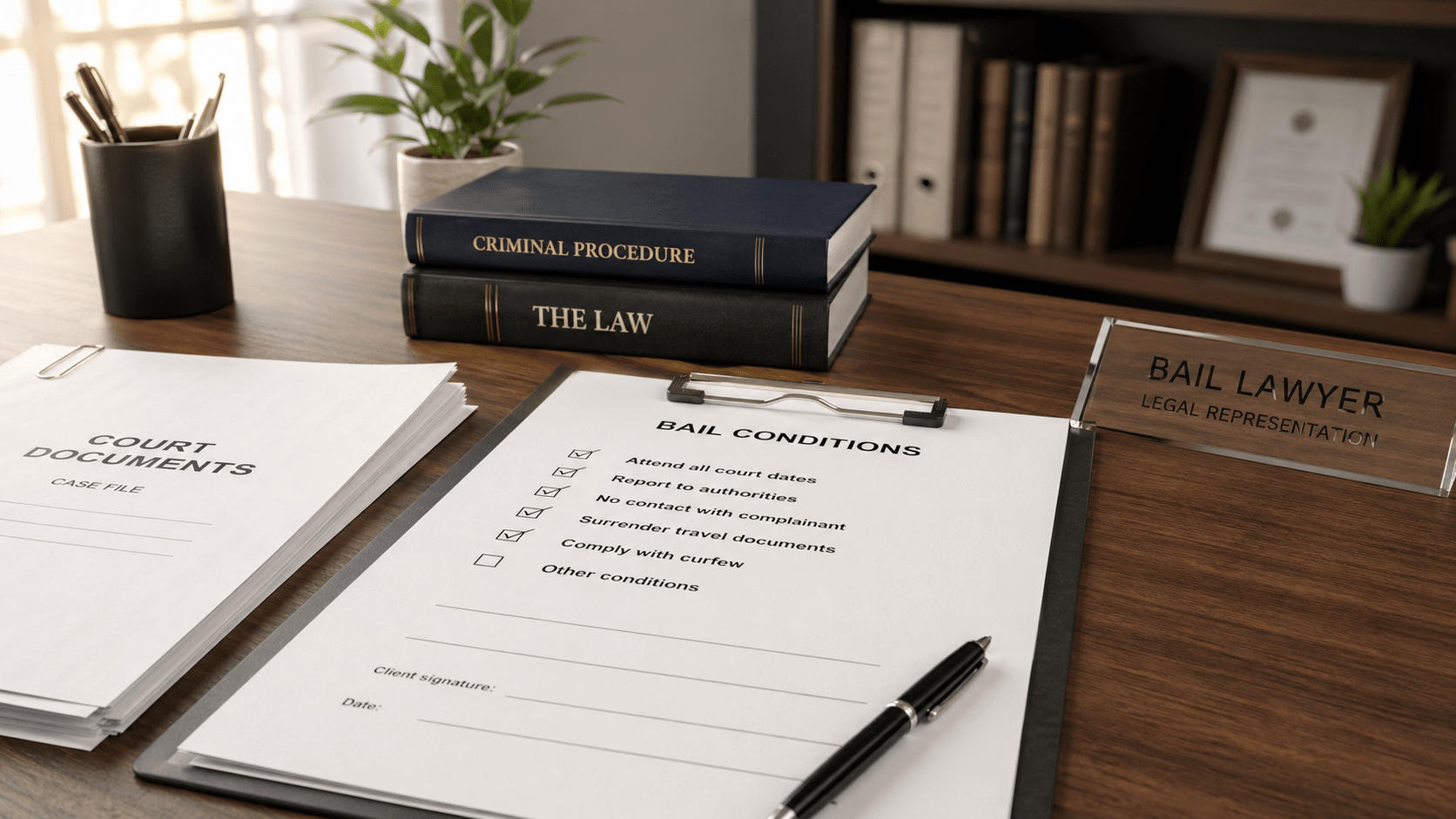
Bail conditions in South Africa are the rules attached to release from custody while a criminal case continues. They exist to make sure the accused comes back to court, does not interfere with witnesses, and does not place the public or the case at risk.
Some conditions are routine. Others can be argued, narrowed or adjusted if they are too broad for the facts. The aim is not to avoid conditions altogether. The aim is to secure release on conditions the accused can realistically obey.
Short answer: common bail conditions include attending every court date, reporting to a police station, staying at a fixed address, avoiding contact with complainants or witnesses, surrendering a passport, obeying a curfew and not committing further offences while on bail. Whether a condition can be negotiated depends on the charge, the evidence and the risk the condition is meant to manage.
Common bail conditions
Common bail conditions include:
- attending every court date;
- reporting to a named police station;
- living at a fixed address;
- not contacting complainants or State witnesses;
- staying away from a specific address or area;
- surrendering a passport or not applying for travel documents;
- obeying a curfew;
- not committing further offences while on bail.
The condition should fit the risk. If the concern is flight risk, the court may focus on address, passport and reporting conditions. If the concern is witness interference, the court may impose no-contact or exclusion-zone conditions.
Where do bail conditions come from?
Under section 62 of the Criminal Procedure Act 51 of 1977, a court may add further bail conditions to protect the proper administration of justice. The Act specifically refers to reporting, places the accused may not go, communication with prosecution witnesses, and an address for service of documents.
Police bail, prosecutor-authorised bail and court bail are different routes to release. The conditions may look similar in practice, but the authority and procedure depend on the bail route. For the route comparison, read police bail vs court bail.
What may be negotiable?
The bail amount, reporting frequency, curfew hours, travel limits and no-contact wording may sometimes be negotiated. The court or official granting bail still has the final say. A practical alternative often works better than a blanket objection.
For example, daily reporting may threaten employment. A lawyer may propose weekly reporting, proof of work, a fixed address and reliable contact details. If passport surrender is unnecessary because the accused has no passport, that should be placed on record clearly.
Section 63 allows a court, on application by the prosecutor or the accused, to increase or reduce the bail amount or amend/supplement conditions. This does not mean a condition will automatically be changed. It means there is a formal route to ask.
What happens if conditions are broken?
Breaking bail conditions can lead to arrest, cancellation of bail and forfeiture of bail money. Missing court can also create warrant risk. Our analysis of Buda v S explains why bail forfeiture and a separate prosecution for non-attendance are distinct processes. If a breach has happened, get legal advice immediately. Do not wait for the next court date and hope it is ignored.
The next step may be to return to court, explain what happened, address any warrant, and ask the court to deal with the bail position. The facts matter: a genuine mistake is not the same as deliberate non-compliance, but both need to be handled quickly.
What families should check before release
Before the accused leaves the police station or court, make sure the family understands the next court date, the reporting duty, the address requirements, no-contact restrictions, travel limits, and who holds the bail receipt. A condition that is misunderstood can still create serious consequences.
For a broader overview, read how to get bail in South Africa. If a family member is still in custody, our formal bail application procedure guide explains the court process.
This article provides general legal information only. Bail conditions depend on the charge, the facts, the evidence, the accused person’s profile and the decision-maker granting bail.
Bail conditions FAQs
Can bail conditions be changed?
Sometimes. Section 63 of the Criminal Procedure Act allows a court to increase or reduce bail or amend/supplement conditions on application by the prosecutor or accused. The court will consider the facts and the reason for the proposed change.
What is the most common bail condition?
The most basic condition is that the accused must attend court on every required date. Other common conditions include reporting to a police station, staying at a fixed address and avoiding contact with witnesses.
What happens if someone misses a reporting condition?
They should get legal advice immediately. A breach can lead to arrest, cancellation of bail or forfeiture consequences. The response depends on the reason for the breach and the current court position.
Related bail guides: If conditions have been breached, read bail violations and revocation. For special situations, see juvenile bail, foreign national bail and bail with surety.